Showing posts with label Thelma & Louise. Show all posts

Wednesday, April 29, 2015

GRAB A SOFT DRINK AND SOME POPCORN AND JOIN US!


Hi folks,
Here's an interview I did recently for the Writer's League of Texas in conjunction with an upcoming appearance I'm making with them on May 16. Details are on their website. I can't wait!

Instructor Spotlight

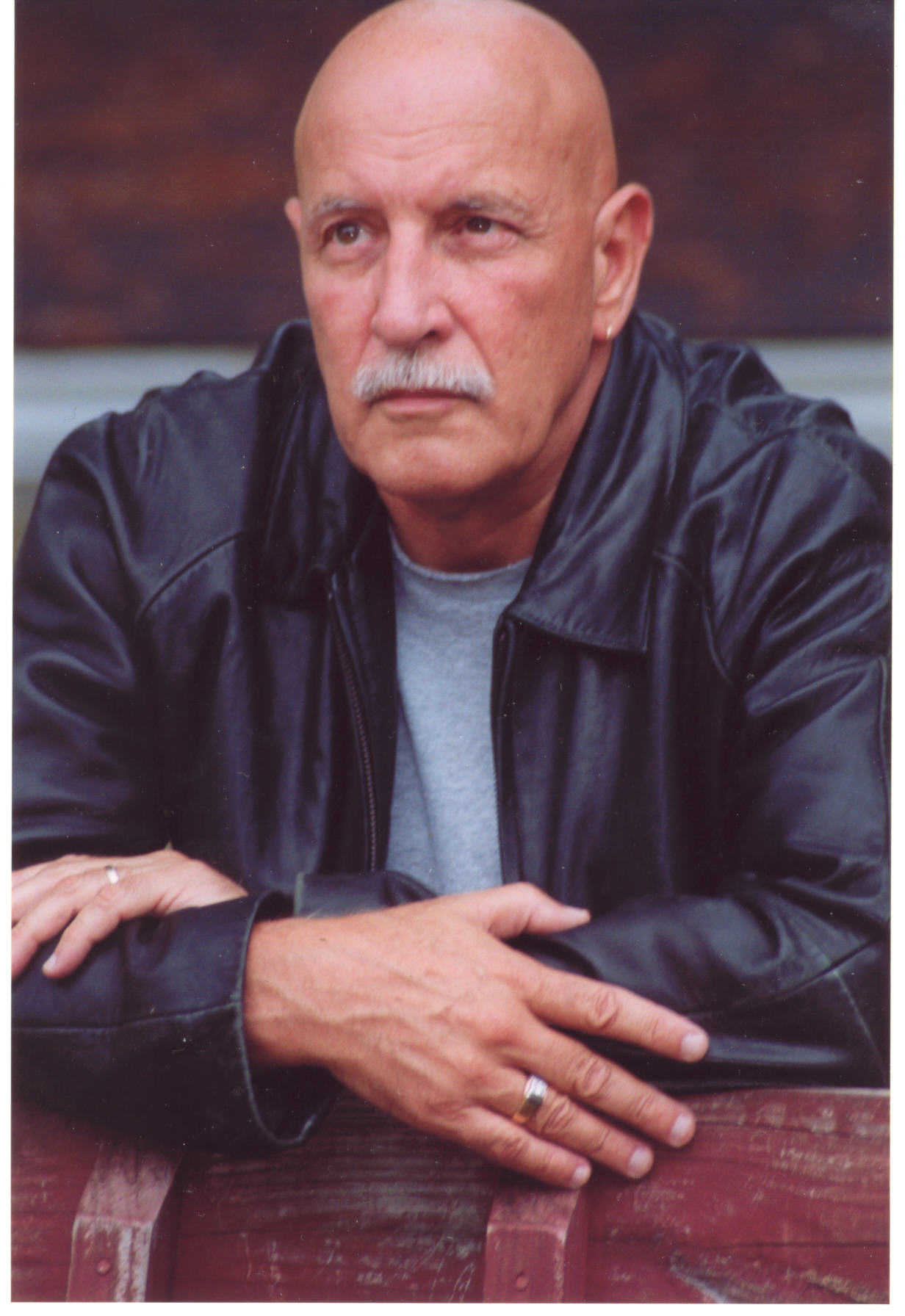
Les Edgerton has published eighteen books including the novel The Genuine, Imitation, Plastic Kidnapping and his most recent work, Finding Your Voice: How to Put Personality in Your Writing. His fiction has been nominated for the Pushcart Prize, O. Henry Award, Edgar Allan Poe Award, PEN/Faulkner Award, the Derringer Award, Spinetingler Magazine Best Thriller Award, Texas Institute of Letters Jesse Jones Book Award, and the Violet Crown Book Award, among others. One of his screenplays was a semifinalist in the Academy Award’s Nicholl’s Foundation and another was a finalist in both the Writer’s Guild Awards and Best of Austin Screenplay competition. He’s taught creative writing for the UCLA Extension Writer’s Program, was the visiting writer-in-residence for the University of Toledo for three years, and the visiting writer for Trine University. He currently teaches an ongoing private novel-writing class and provides private coaching.
Les is teaching a class for the Writers’ League called “Watch to Write: Lessons for Novelists in Thelma and Louise” at St. Edward’s University. A native Texan, Edgerton is making several appearances in Texas this summer including this workshop, an appearance at BookPeople in Austin, an appearance before the San Antonio Writer’s Group, and will be on staff for the Writer’s Retreat Workshop at the Oblate Retreat in San Antonio, all in May. Details can be found on his website. Read the interview below and visit the class page to learn more.
LesEdgertonScribe: When did you know you were a writer? Was there a defining moment in your personal history?
Les Edgerton: I knew at about the age of five. When I read my first book by myself I knew at that moment that I wanted to be a writer. I’ve never wavered for a moment. I thought at the time I could write a better story than the one I just read. I couldn’t then… but I can now.

Scribe: You’ve been a lot of things — homeless, a hairstylist, a life insurance agent, among other things. Do your array of experiences provide a foundation for writing?
LE: I wouldn’t call it a “foundation” exactly. It’s always been about material and experiences. When I was very young, I knew I wanted to be a writer and I thought at the time the best way to accomplish that was to accumulate experiences and then write about them, ala Jack London. A couple of years ago, I read an interview with Flannery O’Connor and she said if a person lived for the first 17 years of their life in the same house and same little town, he/she would have enough material for a lifetime of writing. Wish I’d read her years before—I could have saved myself a lot of trouble! Except, I’d do the same thing. I knew at that early age that one day—if I lived long enough—that I’d be 80 years old and sitting in that wheelchair at the nursing home with that blanket over my lap and all the money, cars, houses, clothes, et al, wouldn’t mean a thing, but if I had memories, I’d have something. I’ve got those memories now and wouldn’t trade them for anything.

Scribe: You recently published a book on craft. When did you become confident enough in your writing ability to start being able to write about writing?
LE: When I was in my thirties. I wrote Finding Your Voice, but it wasn’t published until my forties. I wrote it a few years before that, but didn’t know how to go about getting it published until a few years later. Actually, I knew how to get published but craft books don’t earn large advances as a rule and my agent at the time didn’t want to mess with something that was only going to offer a $10,000 advance. So, eventually I just sent it out myself.

Scribe: What is the intersection of film and books? What advantages do books have over movies and vice versa?
LE: The “intersection” is that they’re both forms of storytelling and that’s what good fiction is always about—creating a story. Books have a decided advantage over films because novels allow the writer to include the protagonist’s thoughts, whereas movies only show what can be seen and heard. That means that they naturally can provide more depth. Movies have an advantage over books in their production values—the senses of sight and sound are affected much more profoundly. That advantage however, is also a disadvantage, simply because they affect more than one sense. That reduces the audience’s level of active participation. The audience of a movie is more of a passive subject as most of the experience is provided for them and they don’t need to bring much to the experience to gain the benefit. As Marshall McLuhan so brilliantly delineated, a media that only affects one sense (as in reading) requires the audience to bring their imagination to bear to make the experience work, i.e., a “cool” media. Movies, being a “hot” media, don’t require nearly as much imagination from the participant, who merely has to sit there and experience the story passively. One’s brain usually isn’t overtaxed watching a movie… That “dumbing of America” that received so much press years ago really is true, as our entertainment tastes evolved to where more people went to movies and watched TV and reduced their reading, so did the overall intelligence as their imaginations were utilized less and less… To enjoy a movie, all one has to do is sit there and not do a whole lot of thinking. Reading, however, requires an active imagination, not to mention a larger source of information to call upon. What’s interesting is that old chestnut often posed–which did you like better, the movie or the novel?—was found in studies to be bound to whichever form the story was experienced in first. If a person read the book first, overwhelmingly they claimed to like the book better. If they saw the movie first, the movie won out. It’s basically a case of expectations. If you saw the movie first, you’ll “see” the characters a certain way and the book usually won’t match up to those expectations, and the reverse holds if the person read the novel first. Although there are always a certain percentage of those polled who will almost always answer one or the other consistently, probably because they have a bit of the “snob” gene working…

There’s another advantage to movies these days. When movies began their existence, they borrowed their structures from literature. However, nowadays the opposite is true. Today’s novels borrow their structure from film. Two good examples of that are transitions and beginnings. When movies began, they borrowed transitive models from books—that old “meanwhile, back at the ranch” scrolling across the screen as we went from one scene to another. All of that is gone and transitions ala the models we used even ten years ago in novels are fast disappearing. Beginnings in movies used to be taught along the same lines as novel beginnings. In movies, that used to be a standard ten minutes. No mas. Today, the setup time isn’t usually much more than a few seconds, or at most a minute or two. Same way with novels, because of the influence of film—no more beginning with setup and backstory and all that nonsense these days… At least not in work that wants to have a chance of being published.

Scribe: Why Thelma and Louise and not another movie?
LE: Great question! I’m writing a new craft book based on this workshop and T&L and at first, I intended to use parts from a lot of movies. I have a library of over 1,000 movies and meant to draw from many of them at first. However, the more I looked at other films, the more weaknesses I saw in all of them. Thelma & Louise was the only movie I’ve seen that doesn’t have a single writing weakness in it. Every single frame presents a valid and valuable teaching moment. I simply can’t say that about any other movie I’ve ever seen. There are a couple that come close, but none that were as consistently brilliant as this movie is. It’s quite simply a work of genius as the audience will discover. I’ve watched it over 200 times and I keep looking for a flaw but so far haven’t been able to find one. I’m speaking of writing techniques here. There are other movies I Iike better on an entertainment level, but none approach even remotely the level T&L does in providing perfect teaching lessons on how to write publishable, contemporary fiction. None come close to it. Discovering that was great, as it makes it extremely easy to use for teaching and a beautiful model for learning. In a workshop situation, I don’t have to rely on the audience knowing a bunch of movies to see great examples instantly. Virtually everything a writer needs to know and understand about contemporary fiction writing techniques will be shown at our gathering. And, they’ll get to see not only flawless writing but how the whole of the many parts comes together to create a powerful story. That is really important to me as I see a lot of writer education based on bits and pieces of diverse work presented as examples. We learn “parts” of writing, but not story as much. By watching a film that works on every single level and to see how all the parts we’ll go over come together into a seamless story, is extremely valuable. Please believe me that after watching this movie the way we will, I unhesitatingly guarantee the participant’s writing I.Q. will be raised significantly. If you attend you’ll see what I mean and I’m very confident you’ll feel like I’ve understated just how great a teaching and learning tool this movie presents. I predict participants will look back and identify many, many “aha!” moments.

Scribe: Last question … will there be popcorn?
LE: I hope so! Like Blanch Du Bois, I depend on the kindness of others. The only thing I’m not working at this showing is the concession stand…
— Thanks, Les!

Monday, April 13, 2015

Openings still available...

 Back to Calendar

Hi folks,

There's still a few spots left in my upcoming presentation on May 16 from 10 am - 4 pm at St. Edwards University for the Writer's League of Texas. Go here  for additional info on registering and attending. Hope to see some of you there!


"Watch to Write: Lessons for Novelists in Thelma and Louise" with Les Edgerton

$129
Register until
5/13/2015


Members: Login to receive members-only pricing.

Location
St. Edward's University, Trustee Hall 303
3001 S. Congress Ave.
Austin, TX 78704


5/16/2015 From 10:00 AM to 4:00 PM


$69 for members (please log in for member pricing)

$129 for nonmembers
Before purchasing, please read all policies as noted below and on our Classes page.

Note: Online registration will close at the end of Thursday, May 14. After that you can pay admission at the door with a check for the walk up rate - $79 for members and $139 for nonmembers - as long as seats are available. Thank you!

Watching good movies can make you a better fiction writer.
That’s the entire premise of this workshop. The power of visual storytelling can allow writing teachers to demonstrate fiction-writing techniques in a more effective and entertaining way. 

In this class, we will watch the movie Thelma & Louise in its entirety, stopping frequently to desconstruct and discuss techniques that Callie Khouri (the screenwriter) uses to create a wonderful work of art—the same techniques used by the best fiction writers. Virtually every frame of this movie offers a valuable teaching moment for writers, and on top of that it provides an entirely pleasurable way to learn.

Class take-aways will include:

- How actions both inform characterization and provide a dynamic means to create character arc, creating believable, exciting people and not “characters.”

- How to write riveting scenes and set up future scenes up by foreshadowing.

- How to handle exposition and backstory.

- Giving your characters physical actions to define them and show character arc.

- How to utilize setting to define character.

- Surface-problem and story-worthy problem--How each is related and resolved.

- How to write resolutions that satisfy emotionally.

- How to create “watercooler moments”

- A bonus takeaway is learning how to create a novel that is cinematic in nature which could help sell it as... you guessed it...a movie!

This workshop would be valuable to every skill level of writer—from the raw beginner to the polished writer who has been published several times. And, even though it’s an event geared to novel writers, the same principles we’ll cover apply also to screenwriters. So… everybody is welcome!


About the instructor:
Les Edgerton has published eighteen books. His fiction has been nominated for the Pushcart Prize, O. Henry Award, Edgar Allan Poe Award, PEN/Faulkner Award, the Derringer Award, Spinetingler Magazine Best Thriller Award, Texas Institute of Letters Jesse Jones Book Award, and the Violet Crown Book Award, among others. One of his screenplays was a semifinalist in the Academy Award's Nicholl's Foundation and another was a finalist in both the Writer's Guild Awards and Best of Austin Screenplay competition. He's taught creative writing for the UCLA Extension Writer's Program, was the visiting writer-in-residence for the University of Toledo for three years, the visiting writer for Trine University, taught creative writing online for Vermont College, Phoenix College, St. Francis University, Writer's Digest, for the New York Writer’s Workshop and others. He currently teaches an ongoing private novel-writing class and provides private coaching. The workshop on Thelma and Louise is the heart of his newest craft book, A Fiction Writer's Workshop at the Bijou.

A native Texan, Edgerton is making several appearances in Texas this summer including this workshop, an appearance at BookPeople Bookstore in Austin, an appearance before the San Antonio Writer’s Group, and will be on staff for the Writer’s Retreat Workshop at the Oblate Retreat in San Antonio, all in May. Details found on his website at www.lesedgerton.net.


REGISTRATION BY MAIL: If your browser has difficulty with our website store, or if you prefer to mail in a check, click HERE for a class registration form. The document provides instructions on where to mail it.

NOTE: Tickets are not refundable, but they are transferable. If you purchase a ticket and then find you cannot attend, someone else can attend in your stead. Simply contact us at wlt@writersleague.org or 512-499-8914 and let us know so that we can update the class roster. For policies, please visit our Classes page.


This project is supported in part by the Cultural Arts Division of the City of Austin Economic Development Department. Visit Austin at NowPlayingAustin.com.


Writers' League of Texas classes and workshops are also funded in part by the Texas Commission on the Arts - Investing in a Creative Texas. For more information, go to www.arts.texas.gov.

The Writers' League of Texas would like to thank St. Edward's University for its generous support and commitment to community, ongoing education, and the arts. Visit www.stedwards.edu.


Blue skies,
Les

Monday, October 28, 2013

Excerpt from the new craft book I'm writing, on Protatonists and Antagonists.

Hi folks,

As many of you know, I'm writing a new craft book on using movies to inform fiction techniques, titled A FICTION WRITER'S WORKSHOP AT THE BIJOU. In it, I'm using the film THELMA & LOUISE as my model. I've read thousands of screenplays and seen thousands of movies and this is, hands-down, the very best model for writers I've come across. In virtually every single frame, there's a teachable moment for fiction writers.

Delivering one of those "teachable moments..."


One of the problems I've determined that face writers are the terms we employ in our advice/instruction. We borrow freely from lay terms, such as "action" and the like and often the writer sitting in our classes apply the lay definitions to these terms, not realizing we intend a different meaning. The word "action" for example. Often, writers take this to indicate more melodramatic definitions and when they are told their story needs to begin with "action" they start off with shootings, buildings being blown up, kidnappings, murders and the like. Not that some stories shouldn't begin with those kinds of actions, but the term action when used for fictive purposes means something far more encompassing than simple physical actions. "Action" in fiction terms is used to denote almost any kind of activity involving conflict, either overt or covert. Dialog, for example, is action. Reading something that creates tension and a story problem is action. Seeing a dead bird by the side of the road is action if it elicits a memory and a realization.

I don't intend this to be a discourse on the word action, but am just using a simple term to illustrate how writing instruction becomes perverted by an imprecise understanding of the terms borrowed from the lay language, the word "action" being only one of many such terms incorrectly applied.

For example, in James Baldwin's brilliant short story, "Sonny's Blues," the story begins with the protagonist sitting in a subway car reading the day's newspaper. In it, he comes across a news story about his brother's arrest. Instantly, this creates a bona fide story problem for him. In this instance, reading is an action. Nobody was shot or killed, nobody was kidnapped, no bombs went off, none of that. He is just sitting... reading. That's just one of many examples of what the term "action" means in fiction.

Now. The two terms I want to talk about today are the terms "protagonist" and "antagonist." The following is an excerpt from Chapter Two of the book I'm writing. I'm aware that what I say here will go against what you may have been told from others. You'll have to determine for yourself if what I promulgate has sufficient evidence to prove what I'm proposing as the definitions for these terms. You may agree with me or you may choose to disagree. At the least, I hope I've given you solid food for thought.

And, without further ado, here's a bit of Chapter Two, on the definitions of Protagonists and Antagonists.


CHAPTER TWO

Protagonists and Antagonists

The two most important characters in a novel are the protagonist and the antagonist. I want to spend some time defining these two characters and their roles in the story as there are many misconceptions.
First, to define each term.
The Protagonist
The protagonist is simply the person through whose eyes and viewpoint we experience the bulk of the story. I feel it a mistake to assign moral qualities to either the protagonist or the antagonist. Therefore, I believe it’s misleading to use terms such as “hero” or “heroine” to describe the protagonist. Doing so assigns a moral value to him or her that is not only inaccurate, but that often leads to creating poor characters. When you think of protagonists as “good guys” and antagonist’s as “bad guys” or villains, the temptation is great to create one-dimensional, cardboard, almost “cartoonish” characters. Dudley Doright and Snidely Whiplash.
By the same token, the term “antihero” is misleading. By its very name, it also implies a moral quality assigned to the character. The protagonist is neither a hero nor an antihero. They’re simply the person through whose persona we experience the story.
Do yourself a favor. Don’t think of these two characters as “good” and/or “bad.” I think you’ll find you create far more complex and compelling characters by not doing so.
Same way with that term that’s crept into our writing lexicon in the past few years. That main character thingy, or that even more insidious appellation, that “MC” monstrosity. That says… nothing. Of course the protagonist is the “main character.” But, to refer to him or her with that term, negates somewhat the value of the protagonist. Describing the protagonist as the “main character” implies that it’s the story that’s mostly important (at the expense of character) and that’s simply not true. All stories, regardless of genre, are pretty much the same. It’s the protagonist in his/her battle in the story to resolve the story problem that’s important. Plots are limited—there are only 6-8, depending on the source. Characters—particularly protagonists—on the other hand, are limitless. The life of any story isn’t the plot. It’s how the protagonist and antagonist operate within the plot, not the clever and various ways in which the killings, bombings, kidnappings, love and/or sex scenes, naval button contemplations or whatever are depicted. Those things are incidental to the characters and only exist to serve the characters and provide the obstacles for the struggle.
The Antagonist
Likewise, don’t think of the antagonist in terms of villains. He or she is simply the person whose goal(s) conflict with those of the protagonist’s. Period. Again, just as with the protagonist, no moral value is assigned, at least in relationship to the definition of their character. Not the “bad guy” or “bad gal.” If you think of antagonists as villains, you’ll end up with Snidely Whiplash-type characters. One-dimensional, cardboard, cartoonish characters.
The antagonist, just like the protagonist, can be a good guy or gal or a bad guy or gal. Doesn’t matter. Novels aren’t morality plays. As Samuel Goldwyn said to the screenwriter who sent him a script with a theme of good and bad (badly paraphrased): “Don’t send a message. Western Union sends messages and they do it well. Send me a story.”
Can there be more than one protagonist or antagonist?
Nope.
One protagonist, one antagonist per novel.
Now, that doesn’t mean they each can’t have multiple allies. They both can and both most likely will.
Are there exceptions? Probably, although I can’t think of any right now. Remember that just because a novel was published doesn’t “prove” it was any good. Doesn’t mean it’s a good model to follow, necessarily. Bad novels get published just about every day. But, do yourself a favor and don’t use a bad novel for a template. I can pretty well guarantee you that there aren’t very many good novels with “co-protagonists” and “multiple antagonists.”
One of the reasons this is true is that when you begin creating more than a single protagonist and/or antagonist, the reader’s focus begins to get diffused. We can “see” an individual. Once you begin creating crowds, it becomes harder to figure out whose story it is or who we should follow.
Let’s look at Thelma & Louise for particularly great examples of a powerful protagonist and an equally-powerful antagonist.
By the way, the strength of your novel depends on the strength of your antagonist, not your protagonist. Write that down. The antagonist should be at least the equal in strength of the protagonist, and preferably stronger. This includes all forms of strength, including physical, mental, emotionally, resource-wise… in every way you can dream up. If the antagonist is weaker in any way than the protagonist, then the protagonist doesn’t have to do much to prevail, does he? And, you want the protagonist’s struggle to be uphill all the way.
The protagonist in Thelma & Louise is Thelma. Period. I know the title says Thelma and Louise, but it’s Thelma’s story. Louise is along for the ride and the primary role she serves is the Mentor role. Khouri was well-aware of that. If they were co-protagonists, wouldn’t she have given Louise’s big sex scene the same big stage as she did Thelma’s? She didn’t. It’s Thelma’s story, all the way.
Another factor that determines who the protagonist is is the character arc. You know, that old Freitag scheme that looks like a roller coaster? Only the protagonist gets that. His or her character has to undergo a significant change as a result of the struggle she’s undergone to achieve the story goal. Only Thelma undergoes this change in the story. Louise changes a bit, but by and large, at the end of the story, she’s pretty much the same as she was at the beginning. Thelma, on the other hand, has had a profound change from where she began. You’ll see that change as we go along here.
And, the antagonist is… Hal the cop as played by Harvey Keitel. Is he a villain? Nope. Not in the least. He’s undoubtedly the single most moral character in the story. His goal is completely honorable and good… for those looking for good guys and bad guys in their fiction.
It’s just that his goal is in direct conflict with Thelma’s. His goal is to rescue Thelma and her friend, Louise. To save them first from going to jail and then, as the story evolves, to save them from being killed. Absolutely, 100% honorable goal. Can you see how the terms “villain” doesn’t have a thing to do with Hal’s character? Do you think for a second that if Khouri thought in those terms—heroes/heroines vs villains—could have possibly written these characters—particularly Hal’s? Not a chance in hell! If her knowledge of story had rested on those kinds of definitions, she would be writing direct-to-video screenplays, if even that.
Please—if you get nothing else from this book—never again think of your characters as hero/heroine and villain!
Are there characters in the story who provide obstacles for Thelma? Sure. Her husband Darryl is about as “villainy” as you could ever wish for. Just about every male character in the story provide opposition. J.T. steals their money even though he does afford Thelma respect in their love-making. The state cop with the tailored uni and mirror sunglasses and male chauvinist hog attitude is villainy. The tanker driver with his pig-like gestures and intentions is villainy. Harlan, the would-be rapist is definitely villainy. The guys manning gas pumps when they stop, or are leaning up against building posts ogling them, are all minor variations of villainy. And, guess what? Just about all of those characters fit the Snidely Whiplash mold. No antagonists in that bunch, except in a very limited, stereotypical role, basically as villainous. Louise’s boyfriend Jimmy, is pretty much a good guy, but he’s definitely not an antagonist. He’s one of their few “helpers” when he comes to Louise’s aid (and, by extension, Thelma’s). No opposition to Thelma’s goal there.
The one character whose goal provides consistent and powerful opposition to Thelma’s goal is Hal. She wants to escape; his goal is to catch her.
And it’s that dynamic that makes for complex characters and complex stories. Two individuals, each with a goal at odds with the other. Both with worthy goals. No “good vs evil” going on here at all. Each the very model of a great protagonist/antagonist. A very powerful antagonist. Look at Hal’s strengths. He’s a lawman with tons of experience catching criminals. He’s got all the technological advantages possible. He’s got a virtual army of people to help him find and catch them. He’s got state of the art computers, communications, transportation, radar, phone tracking capability at his disposal. He’s got the state police along with the FBI at his disposal. He’s got a frickin’ helicopter! He’s got all this arrayed against a housewife and a waitress in a car and little money and their destination known. He’s extremely powerful and about as strong of an antagonist as you could ever invent. When Thelma defeats him—which she does in the final scene—it resonates with the viewer since she hasn’t beaten a weakling at all but an antagonist that was stronger in just about every single way. Think about how this story would have been had Khouri made Hal a nasty guy who hated women and just wanted to either kill Thelma and Louise or just wanted to put them in jail. She could have done that… if she thought in terms of “heroines” and “villains.” But she didn’t. She created a protagonist and gave her a worthy antagonist.
Perhaps why she won the Oscar for this story?

I'm busy at work right now completing this book upon the urging of my agent. Hope when it's done, you'll consider glomming onto a copy.

Hope this helps inform your own writing!

Blue skies,
Les 
P.S. Here's an "old" craft book I wrote that you may find useful.

On Saturday, November 23, I’ll be conducting a REALLY BIG (channel your inner Ed Sullivan voice here) workshop where I show the movie THELMA & LOUISE and provide commentary throughout, showing salient fiction techniques, for the Indiana Writer’s Center. This one is a labor of love and exhausting to deliver and I’ve heard rave after rave from those who’ve attended this one before. Click on http://www.indianawriters.org/ or go to http://www.indianawriters.org/products/a-fiction-writers-workshop-at-the-bijou for complete information.